



I woke up to this message from a scholar in my SA Bootcamp 3.0 last weekend.
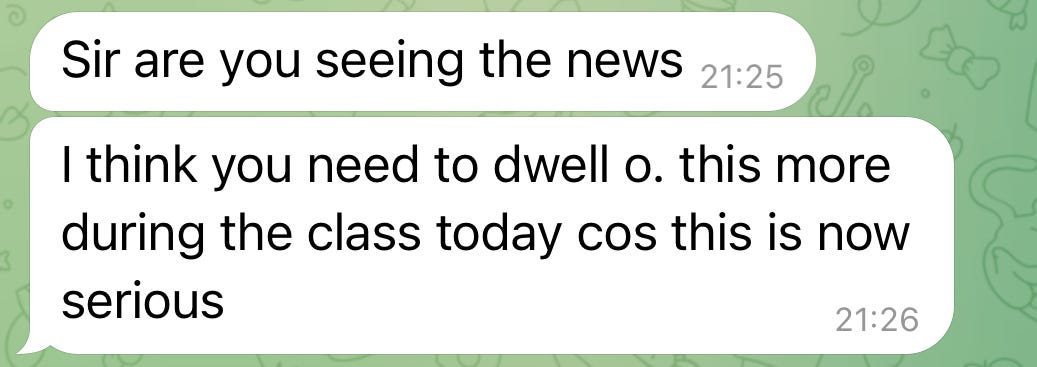
Over the past few months, I’ve gotten similar messages from other scholars. Messages of uncertainty about whether their efforts and investments in US education would be worth it in the end. And they are right to feel that way. Since President Donald Trump took office, many new policies have been announced. Some of them directly affect international students, like:
July 8: Visa duration for several African countries was reduced to 3 months.
September 6: US visa interview can only be done in your country of nationality/residence.
September 19: The H-1B visa (work visa) has an extra filing fee of $100,000.
October 20: The $100k H-1B visa fee doesn’t apply to students on an F-1 visa.
October 29: No automatic Employment Authorization (STEM-OPT) extension.
Many of these policies use terminology you might not be familiar with. Stay with me, they’ll all be clear very soon.
If you don’t understand what’s really happening, all these new policies can make you postpone your American Dream. This newsletter is to empower you with the truth. The truth makes you free. Free from worry or fear. It makes you act confidently when everyone around you is panicking. This will be a long newsletter, so sit back and enjoy the ride. You are about to be fired up to succeed.
To understand these policies, we must start at the roots.
The New America: President Donald Trump
Some definition of terms:
Immigrants: People who move to a new country with the intention of living there permanently. E.g., the U.S. Green Card Lottery, which awards more than 50,000 green cards each year.
Non-immigrants: People who enter a country temporarily for a specific purpose. For example: tourism, study, conference, temporary work, etc.
You are classified as an immigrant or a non-immigrant before entering the country.
Before Donald Trump got into office, he was very vocal about one thing: The mass deportation of undocumented immigrants. He told Time Magazine that his target for his 4-year tenure is to deport 15 million to 20 million people who are undocumented in the US. No one knows the total number of undocumented immigrants currently. But it’s clear that he’s on that mission. By undocumented, they mean any person in the US who isn’t in a valid visa status (e.g., an expired visa or illegal entry).
A friend told me of a time he had an accident here in Georgia. The lady who hit him was an undocumented immigrant. In situations like this, her car insurance should cover the damage to his car. But she didn’t have car insurance because of her status. He had to let her go and fight to get the bill from his own car insurance or his pocket. These things happen every day.
So far, President Trump has signed 210 executive orders, 54 memoranda, and 104 proclamations. That’s a total of 368 presidential actions in only 10 months. For context, President Joe Biden did 178 presidential actions in his first two years.
What’s the result of his actions so far?
More than 2 million undocumented immigrants have left the US (1.6 million people self-deported and 527,000 were deported). Obviously, all his efforts are working; he has already achieved 10% of his goal. Don’t expect him to stop now.
From all of this, you can see who he is after: Undocumented immigrants.
If you are a documented non-immigrant (e.g., on a student or work visa), you aren’t his focus. If you change from a non-immigrant to an immigrant (e.g., a Green Card or American citizenship) following the documented path, you aren’t his focus.
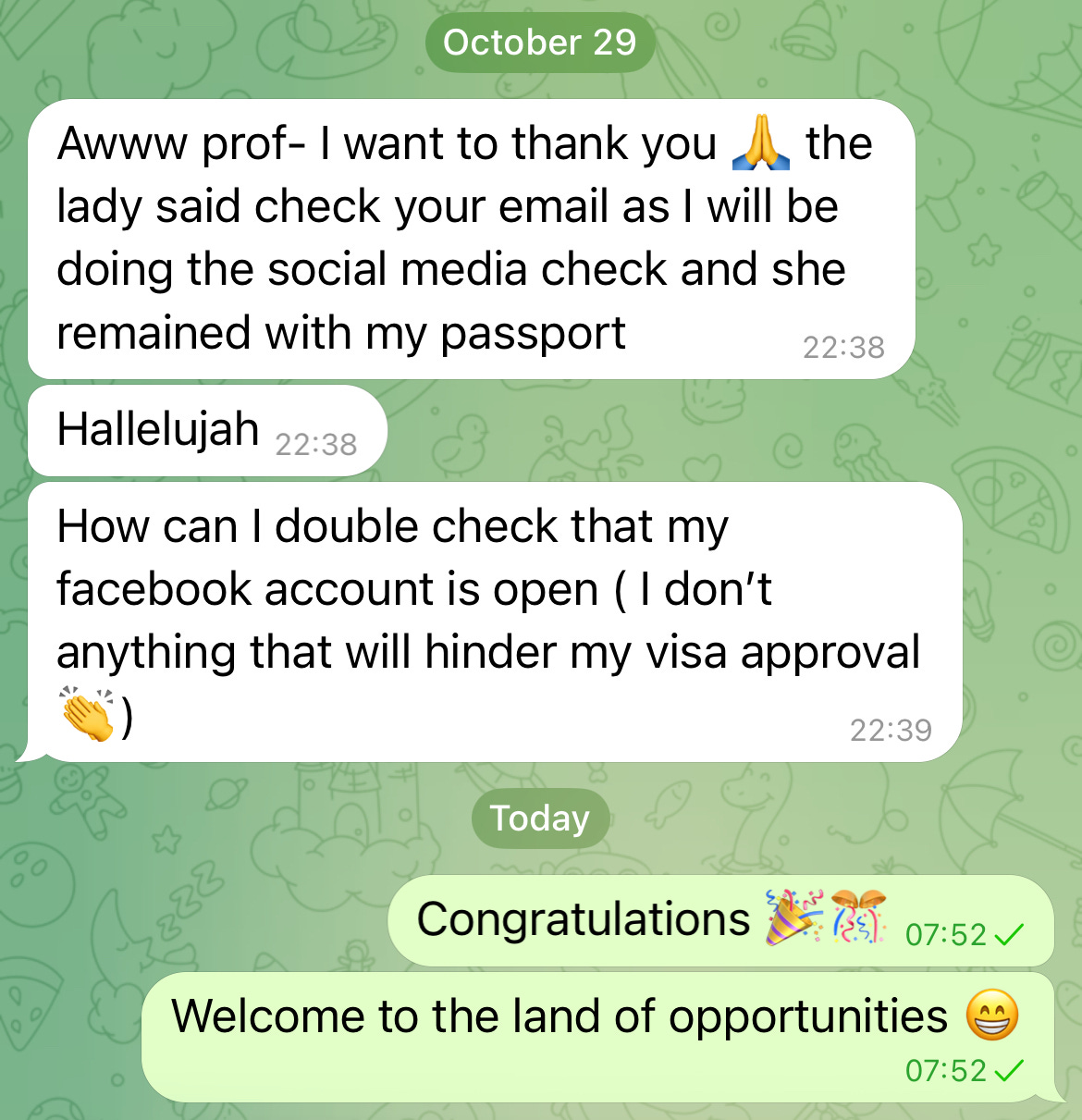
You can still come in as a student and follow the documented path to citizenship. Student visas are still being approved every day; my client got approved last week.
Let’s see the full documented student path so you know what lies ahead.
The Road Ahead: From Student to American Citizen
One mindset switch I had to make to enjoy opportunities in the US was to move from a short-term to a long-term perspective. So I mean thinking in years, not days. Nothing great happens overnight. It’s our desire for fast food that keeps us sick, weak, and unproductive.
Enjoying the American Dream is a long game, and you have to be aware of the entire path. This knowledge shouldn’t frighten you, but empower you. This gives you a roadmap to plan ahead and avoid wasting unnecessary time in any phase.
The US rewards those who plan ahead, so you should be making adequate plans for the next phase before you get there. The documented path from student to American citizen has 5 phases.
Phase 1: Student Visa (Duration: 2-6+ years)
The majority of students receive F-1 visas (non-immigrant visas). If you come with your dependent (spouse or child), they get an F-2 visa.
There’s also the J-1 visa. People call it the Exchange Visitor visa. It’s for anyone doing work-and-study exchange programs. The visa covers a lot of different people. Students, research scholars, professors, interns, trainees, and summer work travelers. A pretty broad range. This newsletter focuses on the path for an F-1 visa holder.
The duration you spend as a student varies based on the kind of program you’re doing. It also adds up if you do multiple programs.
Generally speaking, the duration of the programs are:
Undergraduate: 4 years
Master’s: 18 months to 2 years
PhD: 4-6 years
The new visa laws require your visa interview to take place in your country of citizenship or permanent residence. Previously, students could travel to another country for their interview, as I did in 2023. But that is no longer permitted.
A new policy came out this year that changed things for several African countries. Before, people could get visas lasting 2, 4, or even 5 years. Now those same countries are limited to single-entry visas that only last 3 months. This affects different visa types like B-1/B-2 for tourism, F-1 for students, and others.
Last month, Ghana’s own was reversed back to multiple-entry 5 years for B1/B2 visitor visas and 4 years for F1 visas. We hope other countries (e.g., Nigeria and Cameroon) experience the same. You can check the visa duration for your country here.
You might hear this 3-month duration and be worried. One of my Nigerian clients, whom I coached for her F-1 visa interview in August, asked me, “Do they expect me to complete my PhD in just 3 months?”. Here’s what I told her:
Your visa and your duration of status (D/S) are 2 different things. Your visa is the stamp on your passport that allows you to enter the country. Your duration of status is how long you can stay in the country. For international students, there is no fixed end for their duration of status. This is why someone can still legally be in the US doing one degree after the other. So for the new 3 months policy, you can only enter once but you stay as long as your program demands then work after if you like. However, if you want to leave the US maybe for a wedding or burial, you have to do another interview and get a new visa. It doesn’t matter if your 3-months visa is still valid. Simply because it has changed from a multiple-entry visa to a single-entry visa.
That handled her fear completely. Although she was denied before, I showed her how to give her best in the interview, and she was approved. She is in the US now (I’m so happy for her).
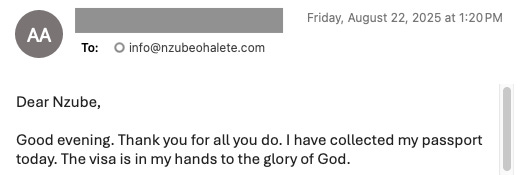
The visa process now includes an additional background check before your visa is approved. It is called “Administrative Processing”. During this time, they vet your social media for any history of political activism, such as past associations with violence. If you’re not involved in those conversations, you don’t have anything to worry about.
So get your admission with a fully funded scholarship, then get your F-1 visa, move to the US, and study. When you are done with your studies, then you’ll kick into phase 2.
Phase 2: OPT Work (Duration: 1-3 years)
After your studies, you are legally allowed to work in the US through the Post-Completion OPT. OPT stands for Optional Practical Training, and everyone is eligible for 1 year. If you are in a STEM field (Science, Technology, Engineering, and Mathematics), you can get a 24-month extension. This brings the total to 3 years for STEM students and 1 year for others.
Every international student can apply for OPT starting 90 days before their graduation. My graduation date was April 30, 2022. I applied on February 17th and got my 12-month EAD card 3 weeks later on the 8th of March. EAD means Employment Authorization. I shared my experience applying for my OPT in this video.
One major mistake I see many international students make is delaying their OPT application till they have a job offer. It sounds logical because you have a 90-day unemployment rule. This means you can’t be unemployed for more than 90 days throughout the 12-month OPT period.
But this is from a place of fear. And when they get the job offer, they now have to apply for OPT with premium processing, or they lose the job. Applying for regular OPT is $470. If you add premium processing to get your response in 30 days instead of 90, you’ll pay an extra $1,695 (Total: $2,165). I said earlier that the US rewards those who plan ahead; you see a clear example here.
These people are acting like Thomas in the Bible. Being a Thomas is expensive. Don’t be a Thomas.
Jesus said to him, “Have you believed because you have seen me? Blessed are those who have not seen and yet have believed.” - John 20:29 ESV
Here’s what makes the OPT (EAD card) great. You can pick your employment start date, and you don’t need a job offer before applying. If you have doubts, then set your start date a month after your graduation, so you use that month to find a job.
The new US policy affecting this phase is extra vetting for those seeking the STEM extension. Previously, it was automatically approved, provided you were working for an E-verified company. Now they will vet every applicant first before approving their extension. They want to ensure they aren’t doing anything that endangers America’s safety. Similar to the social media vetting for F-1 visas.
While on your OPT, you have to start the next phase as soon as possible.
Phase 3: H1-B Work Visa (3-6 years)
The H-1 B is a non-immigrant visa for specialized jobs—roles that require specific expertise and at least a bachelor’s degree. So after getting at least a Bachelor’s degree in a field, you can get the H1-B to work. H-1B visa holders may live and work temporarily in the US for 3 years, with the option to extend for another 3 years. Making a total of 6 years.
Sounds juicy, but here’s the catch: Getting the visa is lottery-based.
USCIS (US Citizenship and Immigration Services) sets an annual cap. Then they select applicants from everyone who registered, based on that limit. So even people with the best qualifications might not be picked, simply because it’s a lottery. The lottery happens every year around March. After you’re selected, you still need to file a petition, which can be approved or denied if you don’t meet the requirements. (Requirements like having a bachelor’s degree, etc)
To help you understand, here are the numbers for the most recent H-1B picks:
Eligible registrations: 343,981
Selected registrations: 120,141
Annual cap: 85,000 (65,000 regular + 20,000 for those with US master’s degrees or higher)
The USCIS always selects more than the cap because not everyone who submits the petition is actually qualified. Some people might change their minds, and others might find better opportunities. Ultimately, they won’t issue more than 85,000 H1-B visas that year. Only 25% of registered applicants will receive an H-1B.
For a student on OPT, you have to be working with an employer willing to sponsor your H-1B. They will file the petition for you with USCIS. The sad part is you might not be picked. This is what makes everyone love STEM. Their employers have three opportunities to try the lottery for them. For NON-STEM folks, there is only one, and you just might be lucky. Who knows.
So this is why some NON-STEM people do a second master’s degree or a PhD while making plans to switch from Phase 2 to Phase 4. Double promotion is allowed—more on this in Phase 4.
On Sept 19, President Trump issued a proclamation that requires an additional $100,000 filing fee for H-1B visas. Previously, your employer had to pay anywhere from $1,000 to $5,000 to submit an H-1B petition; now, $100k has been added to that. On October 22, USCIS clarified that the $100k H-1B filing fee doesn’t apply to those moving from one visa type to another, for example, from an F-1 to an H-1B. That’s good news indeed.
Phase 4: Employment-Based Green Card (5+ years)
During your time on the H-1B, your employer can choose to file for your green card. The process isn’t straightforward, but I’ll give you the gist so you know what’s ahead.
Your employer starts by submitting something called a PERM certification to the Department of Labor (DOL). Then comes a series of reviews. The whole point is to prove that no qualified US workers are available for your position. They need to show there aren’t any local employees (US citizens or green card holders) who can do the job. After your employer can prove this, they will submit the actual petition.
The time it takes to get the green card depends on your country and skill level (EB-1, EB-2, or EB-3). EB stands for Employment-Based.
Chinese and Indians have to wait at least 10 years. Other nationalities would wait 2-5 years. This process kicks in when you are on an H-1B visa, so your Green card arrives before your visa expires.
The green card you get is valid for 10 years. After that, you renew the card itself. It is a permanent residence, so your status doesn’t expire.
Speaking about the double-promotion point I made earlier, you can jump from Phase 1/2 to Phase 4. This means you don’t need to get an H-1B or need an employer to file for you. This is called self-petitioning, and it can be done under two categories: EB-1A and EB-2 NIW. This is the route many international students take. It removes the 3-6 years of the H-1B timeline (More on this in a future newsletter; we already have a lot of information to process here.)
Phase 5: US Citizenship (Promised Land)
After having your green card for at least 5 years, you can apply for US citizenship. This reduces to 3 years if you’re married to a U.S. citizen. The conversion process itself takes from 8 to 12 months, and it involves several steps:
Applying for Naturalization.
Attending a biometrics appointment.
Participating in a citizenship interview and passing an exam.
Attending an oath of allegiance ceremony.
So, a year after filing, you should have your blue passport, which I call the “Promised Land”.
Again, there is a shortcut to cut the 5-year green card requirement. It reduces to 6-12 months if you join the military. However, you can only join with a Green Card.
So what should you do with all this?
We’ve covered the entire path from student to US citizen. Without a plan, this journey can drag on for 26 years. But if you take the shortcuts we talked about, you can do it in as little as 5 years. The US rewards people who plan ahead. (You can already see this from the 21 years removed when you plan ahead and use the legal shortcuts).
One of my mentees defined the US as a “high risk, high reward” country. And I agree. You are risking a lot to come here and get permanent residence. But the rewards are enormous.
The income levels are way higher than in other countries.
You can actually become an American citizen. (This is very hard in countries like Germany or Japan)
High likelihood of your business succeeding.
Meritocracy: You can go from nothing to becoming a CEO of a multinational company if you are skilled.
Research funding: The US spends more on research and development (R&D) than many other countries combined. This is why a lot of US PhDs are fully funded.
The list can go on and on. If you are talented, ambitious, and willing to bet on yourself, the US is the best place to be (undisputed).
So with all the policies that have come up (and the upcoming ones), you now know what’s happening under the hood. You’ve also seen what the future looks like if you follow the documented path.
I’ll leave you with 3 things:
Always do your best
Don’t allow fear into your mind because of the news. If traveling is your goal, then lock in. Apply for admissions. Apply for scholarships. Prepare exceptionally for your visa interview. Send cold emails. Do your best without fear.
Be prayerful
This relocation journey is more spiritual than many people realize. Some of us are doing what no one in our family has ever done. It will be hard. You will need a lot of God’s guidance. So as you work hard, pray hard too. Let God lead you. He might lead you to go to France or Australia first before coming to the US, and that’s okay. He might not even lead you to come to the US. That’s okay too. Everyone’s destiny is not in the US.
Have a community
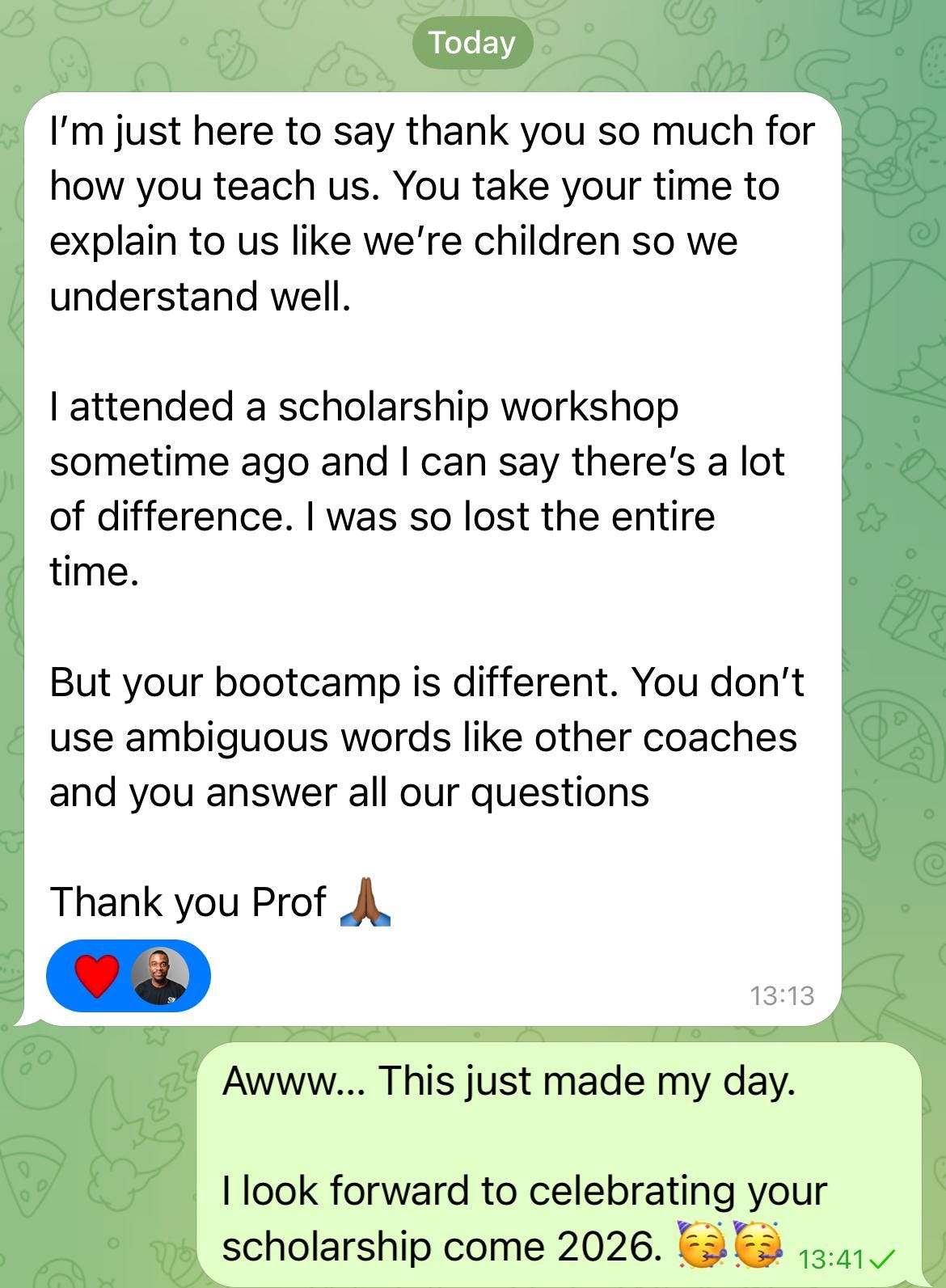
Don’t do this alone. You need a community of people on this same relocation journey. You will get discouraged. You will feel like giving up. I gave up on the US myself after my third visa denial. It’s natural. That’s what it means to be human. But ensure you have people around you when this feeling comes. They’ll spur you back to action. This is why I created the Scholarship Accelerator community: so you can find people on the same journey as you and apply together.
I pray God guides you on your journey.
That’s it. See you next Sunday.
This week, check out the Mastercard Foundation Scholars Program, one of the largest scholarship opportunities for African students.

If you found this post helpful, you can share it with your friend:
If this was forwarded to you, you can subscribe here:
Whenever you’re ready, there are 3 ways I can help you:
The SA Scholarship Bootcamp: This 6-week Bootcamp is designed to help you secure fully funded master’s and PhD scholarships in Canada and the US with expert guidance every step of the way. The Bootcamp 3.0 started on October 18th, 2025, and late registration is ending soon.
US Scholarships Self-paced Masterclass: This self-paced masterclass shows you the 14 steps you need to get fully-funded US scholarships for master’s and PhD - no matter your CGPA. Getting US scholarships is much easier than you think.
F1 Visa Interview Consultation: Get your F1 visa in your next interview. I combine my five F1 visa interview experiences with my expertise in learning from visa officers to prepare you for your visa interview thoroughly. We will identify your strengths and prepare you to deliver them confidently. Your story is the secret to your visa approval.